

A recent study led by researchers at Cornell University used a genetically engineered, non-deadly rabies virus as a tracing tool to map precisely how psilocybin rewires brain circuits in mice. The goal was to understand the mechanism behind psilocybin’s potential as a long-lasting treatment for depression and other mental illnesses.
How the Study Was Conducted
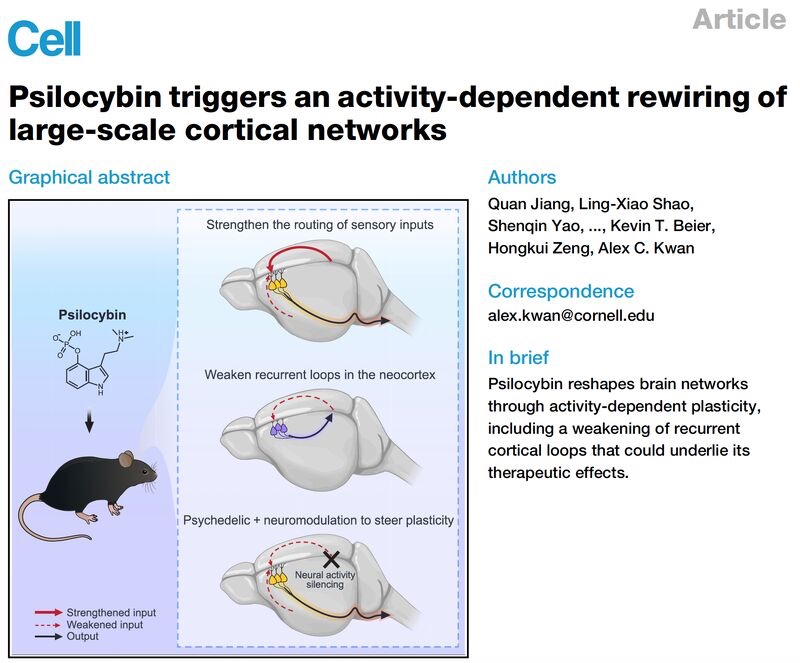
The international collaboration, led by biomedical engineer Alex Kwan, engineered a variant of the rabies virus that was modified to be both pseudotyped (able to enter only specific “starter” neurons) and glycoprotein-deficient (unable to spread beyond a single synapse). This allowed the researchers to:
- Inject a single dose of psilocybin into mice, followed a day later by the engineered rabies virus into the frontal cortex.
- The virus “jumped” one synapse backward to label the presynaptic neurons with fluorescent proteins, effectively mapping the brain’s wiring diagram that connected to the initial “starter” cells.
- After a week, the researchers imaged the entire brain to compare the connectivity patterns of psilocybin-treated mice versus control mice.
Key Findings
The study, published in the journal Cell, revealed network-specific changes in brain connectivity.
- Weakened Negative Loops: Psilocybin weakened connections within the cortex, specifically the recurrent feedback loops associated with rumination and negative thought patterns common in depression.
- Strengthened Sensory Pathways: It strengthened connections between sensory areas and subcortical regions involved in perception and action, potentially enhancing how the brain connects perception to action.
- Activity-Dependent Rewiring: The researchers discovered that the brain’s own neural activity during the psilocybin experience determined which circuits were rewired. By manipulating activity in a specific region, they could alter the pattern of psilocybin-induced changes, suggesting a potential future for combining psychedelics with non-invasive brain stimulation to guide therapeutic outcomes.
The use of the rabies virus as a mapping tool provided an unprecedented, brain-wide view of these changes, explaining how a short-acting drug can lead to long-lasting behavioral effects.
 Dr Bob, Brain Mechanic