
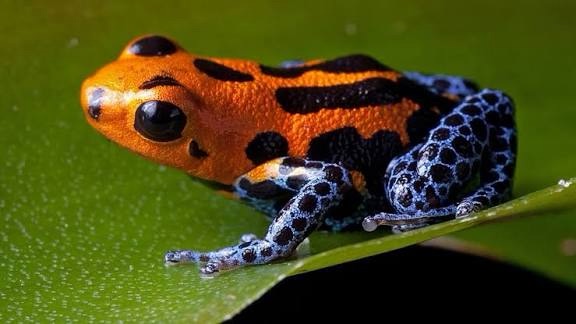
Russian opposition leader Alexei Navalny was killed using a poison developed from a dart frog toxin, the UK and European allies have said.

Two years on from the death of Navalny at a Siberian penal colony, Britain and its allies have blamed the Kremlin following analysis of material samples found on his body.
https://www.bbc.com/news/articles/cwyk4lz4e3eo
“Dark frog toxin” sounds like something out of a fantasy novel, but in biology it usually points to the chemical defenses of poison frogs, especially the vividly colored dart frogs of Central and South America.
Let’s ground this in reality.
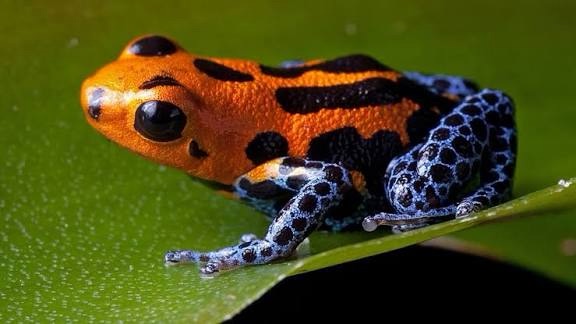
Poison Dart Frogs (Family Dendrobatidae)
These frogs don’t inject venom. They secrete alkaloid toxins from their skin. Alkaloids are nitrogen-containing compounds that often have potent effects on the nervous system. Caffeine and nicotine are alkaloids. These frog compounds are their darker, deadlier cousins.
The most infamous: Batrachotoxin
Species like Phyllobates terribilis produce batrachotoxin, one of the most powerful non-protein toxins known.
What it does:
Binds to voltage-gated sodium channels in nerve and muscle cells. Locks them open. Causes persistent depolarization. Result: paralysis, arrhythmia, cardiac arrest.
A tiny amount can be lethal. Indigenous groups in Colombia historically used secretions from certain species to coat blow darts for hunting. Hence “dart frog.”
Other frog alkaloids
Different species produce different compounds:
Pumiliotoxins Allopumiliotoxins Epibatidine
Epibatidine is especially interesting. It acts on nicotinic acetylcholine receptors and is hundreds of times more potent than morphine as an analgesic. The catch? It’s also dangerously toxic. Attempts to make safer derivatives have been scientifically fascinating but clinically limited. Nature loves tradeoffs.
Where do the toxins come from?
Here’s the elegant twist: most poison frogs don’t synthesize these toxins themselves.
They acquire them from diet:
Ants Mites Beetles
In captivity, when fed fruit flies instead of wild arthropods, many species lose their toxicity over time. Biology loves ecological interdependence.
“Dark” coloration and aposematism
Bright coloration in these frogs is a warning signal. This is called aposematism. High-contrast colors tell predators: “Bad idea.”
Counterintuitive detail: the brightest frogs are often the most toxic. In evolution, honesty can be efficient.
Are they dangerous to humans?
Touching most species briefly won’t kill you. But handling wild specimens carelessly is unwise.
The golden poison frog (Phyllobates terribilis) is the heavyweight champion. A single wild frog may carry enough toxin to kill multiple humans. That said, deaths from casual contact are extremely rare.
The real lesson here is biochemical sophistication. Amphibians evolved small-molecule neurotoxins that rival synthetic pharmacology. These compounds have shaped neuroscience research by helping us understand ion channels, synaptic transmission, and receptor biology.
Tiny rainforest amphibians, rewriting neurophysiology textbooks.
If you want, we can zoom in on:
Molecular mechanisms of sodium channel modulation Comparison with tetrodotoxin from pufferfish Evolutionary ecology of toxin sequestration Or the pharmaceutical story of epibatidine
The rainforest is a chemistry lab with legs.
 Dr Bob, Brain Mechanic