
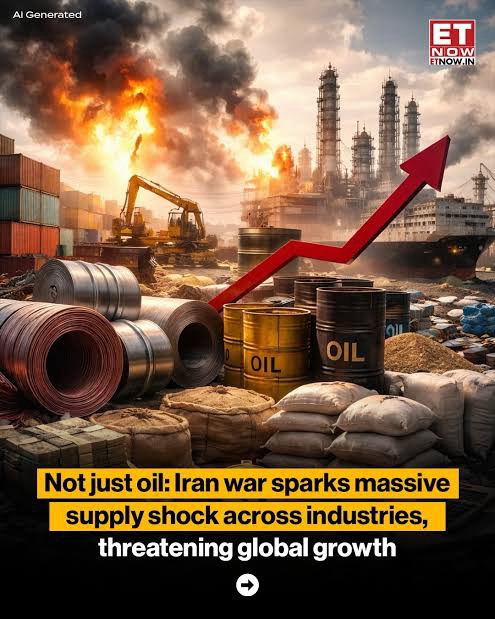
What’s happening right now in the, Middle East isn’t just a foreign policy story, it’s a personal finance story, and you’re one of the main characters.
Oil isn’t top of mind for most people until it suddenly is. We may be approaching one of those generational moments in the energy industry, where supply shocks ripple outward for years. Before diving into the big picture, let’s start with your driveway.
The Problem Nobody Talks About
Americans love big vehicles. SUVs and pickup trucks now account for roughly 80% of new passenger vehicle sales in the U.S. The average new SUV or truck gets somewhere between 16 and 22 miles per gallon — compared to 35+ for a compact sedan. That’s not just a personal budget decision; it’s a structural demand problem baked into the American economy.
When oil prices spike, compact car drivers feel a pinch. SUV and truck drivers feel a punch. If gas doubles from $3 to $6 a gallon and you’re filling a 26-gallon tank twice a week, you’re suddenly spending an extra $150 or more every week just to get to work. That’s $600 a month disappearing from your discretionary budget. Multiplied across tens of millions of households, it’s a serious drag on the entire economy.
Now let’s talk about why prices could spike.
The U.S. Is a Net Exporter and That Won’t Protect You
Many people assume that because the U.S. has become a net oil exporter, going from importing 12.5 million barrels per day in 2005 to exporting a net 3.1 million barrels per day today, we’re somehow insulated from Middle East turmoil. That’s a comforting story, but it’s not quite right.

The U.S. still imports about 8 million barrels per day. We import crude, refine it, and export refined products, because refinery capacity, location, and crude oil type don’t always match up neatly. Imports from the Persian Gulf have dropped to nearly zero, and OPEC accounts for only about 5% of U.S. supply. So yes, we’re more energy independent than we’ve ever been.
But here’s the catch.
Oil Is Priced on a Global Market
Oil is fungible. A barrel of West Texas crude is equivalent in price to a barrel produced in Saudi Arabia or Iraq. When supply tightens anywhere in the world, prices rise everywhere, including at every American gas station, including the one you pull your Suburban into.

Demand for oil is relatively inelastic, meaning people don’t dramatically reduce consumption just because prices go up. You still have to get to work. You still need to heat your home with products derived from oil. And if you’re driving a vehicle that gets 18 miles per gallon, your options for cutting back are limited in the short term.
That’s why even a 1–2% reduction in global supply can trigger significant price spikes. A 20% disruption, the kind that could come from a protracted conflict in the Persian Gulf, would be devastating. Releasing strategic petroleum reserves buys a few weeks of relief, not years.
Supply Disruptions Won’t Heal Overnight
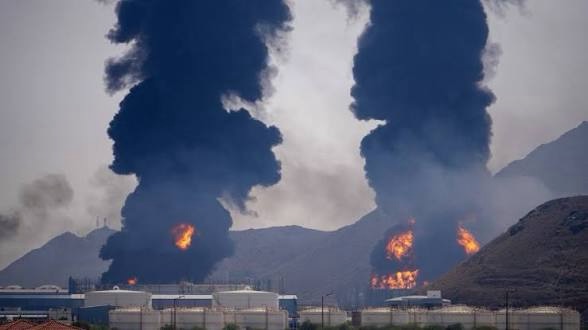
Reports are already emerging that 17% of Qatar’s LNG facilities have been struck, with recovery timelines stretching up to five years. About 20% of global oil supply passes through the Strait of Hormuz. Iran, which produces over 3% of the world’s oil, has seen production disrupted, though the full extent remains unclear.

Saudi Arabia, Iran, Iraq, the UAE, and Qatar combined account for more than 30% of global oil production. Damage to infrastructure in that region doesn’t get repaired in a quarter. It takes years. And while the U.S. can ramp up domestic production, that’s a process measured in months to years, not weeks. Offshore fields take even longer to come online.
This means the SUV driver filling up in suburban Atlanta or Phoenix isn’t just looking at a bad month at the pump. They could be looking at elevated fuel costs for years.
When Prices Spike, Demand Changes, Sometimes Forever
Here’s the historical silver lining, and also the warning: demand changes that follow price shocks tend to be permanent.
The U.S. actually consumes less oil today than it did in 2005, driven by higher fuel efficiency standards, the rise of EVs, reduced industrial demand, and the replacement of oil-powered plants with natural gas.
Two events catalyzed much of this shift: the 1973 Iranian oil shock and the price run-up from 2001 to 2008. After both shocks, behavior changed and didn’t fully revert.
We may be on the verge of another such moment. If gas prices stay elevated long enough, will more American drivers make the math work on an EV or a hybrid?
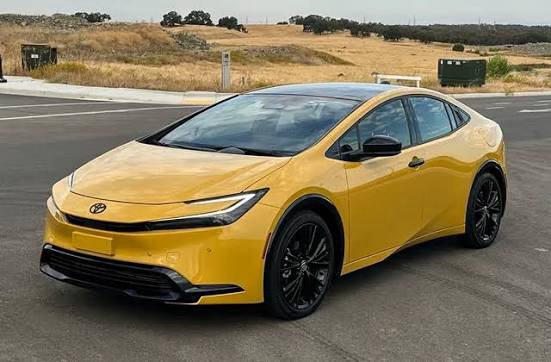
The person who swore they’d never give up their truck or SUV might start doing the arithmetic differently at $6 a gallon. Automakers will feel pressure to accelerate fuel efficiency improvements. The structural demand for oil in the U.S. could shift again, permanently.
But that transition takes years, and in the meantime, people are still driving what they’re driving.
The Cascading Economic Impact
High oil prices function like a broad-based consumer tax. When households that are already stretched thin by fuel costs face even higher prices at the pump, the ripple effects spread quickly:
- Restaurants lose customers who’ve cut discretionary spending
- Retailers see softer demand across clothing, electronics, and home goods
- Businesses face higher logistics and production costs
- The Fed faces pressure to keep interest rates elevated to combat oil-driven inflation
- Companies, already primed to use AI as a cost-cutting rationale, find new excuses to reduce headcount
A recession in this scenario isn’t a remote tail risk. The 2000s offer a cautionary tale: a stock market that went essentially nowhere for a decade, buffeted by the Iraq war and an oil price run-up that many economists believe cracked the foundation that exposed the 2008 financial crisis.
The 1970s offer an even starker one, prolonged period of economic stagnation following the 1973 oil shock that eventually culminated in double-digit inflation and interest rates in the early 1980s.
What This Means for You
Over the last 17 years, we’ve operated in an era of relative calm, low interest rates, cheap energy, and expanding global trade. That appears to be on its way out.
The Middle East is on fire, and 20% of the world’s oil travels through a contested strait. If you’re planning your finances for the next few years, that’s worth factoring in, whether you’re behind the wheel of a hybrid Camry or a loaded F-250.
Hope for the best. Plan for the rest.
 Dr Bob, Brain Mechanic