
And Why We Must Demand Responsible AI in Medicine
It’s time to ask a hard question : Are medical errors really the third leading cause of death in the U.S. Every day, clinicians, no matter how skilled, work against a tide of fatigue, outdated knowledge, limited time, and systemic biases. The cost is measured in lives lost, suffering, and loved ones left behind. If we want a healthcare system fit for purpose, we cannot afford to ignore the urgency for reform.
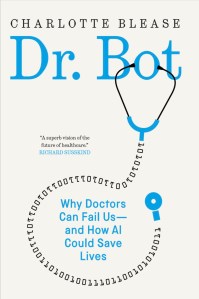
Charlotte Blease’s new book Dr. Bot is a rallying cry to medical professionals, advocates, and policymakers: AI can transform medicine, but only if we fight for responsible design, robust safeguards, and true patient equity.
Exposing the System’s Failures
We must face the truth: Medical errors and misdiagnosis, born from human limitations, are all two common. The status quo is unacceptable. Bias and lack of access, by race, income, disability, or geography, leave millions without adequate care.
Exhausted clinicians, many facing burnout, are forced to choose between documentation and empathy. It’s not fair, nor sustainable. Complacency kills. The healthcare establishment must own up to this reality, and demand change.
AI: Potential for Justice or Entrenched Inequity?
AI won’t fix everything. But it offers real power:
– Smarter, more equitable diagnoses, especially for rare and overlooked conditions.
– 24/7 vigilance: AI isn’t tired, rushed, or distracted. That consistency can save lives.
– Cutting bureaucracy to let doctors spend time where it matters, with patients.
But these tools are only as fair and effective as their makers allow. If we stay passive, biased data, corporate greed, and regulatory inertia will hardwire our worst inequalities into tomorrow’s technologies.
The Risks We Cannot Ignore
AI can entrench bias, erode privacy, and put corporate profit above patient welfare. Without strong oversight, insurers are already using algorithms to deny care. Black-box models threaten transparency and accountability. Data breaches can expose our most intimate information. To stay silent is to endorse these risks.
Policy Must Lead, Not Languish
Let’s call on Congress, federal agencies, and advocacy groups like the AMA and MSD to:
– Mandate diverse training data so AI diagnoses work for everyone, not just the privileged.
– Enforce transparency: Insist that all clinical algorithms are explainable and auditable by independent experts, not only by industry.
– Clarify liability: Doctors cannot be scapegoats for corporate AI errors.
– Prioritize equity: Federal programs must subsidize digital health infrastructure for rural, low-income, and disabled populations.
– Protect professional autonomy: AI must support, not override, clinical judgment.
– Modernize privacy laws: HIPAA must address AI-era risks, not just yesterday’s threats.
Call to Action: Lead or Lose
Healthcare leaders, physicians, and advocates must fight for AI that enhances, not hijacks, medicine’s moral core.
– Draft model laws that require transparency, equity testing, and physician oversight.
– Mobilize watchdog groups to audit real-world AI impacts, and report abuses to regulators immediately.
– Refuse insurer overreach: Guard against AI-powered denial of needed care.
– Include patients, especially the marginalized, in every panel, hearing, and design team.
AI in healthcare presents a crossroads. If we act now, we can reduce error, expand access, and return compassion to our patients. If we wait, we risk letting profit-driven interests deepen disparities and erode trust.
The stakes are too high for apathy. Now is the moment to unite for ethical, just, and human-centered AI in medicine. Don’t settle for anything less.
PS: Check out Dr. Blease’s substack and get a 25% discount on the book (until October 9.)
PSS: Dr. Eric Topol recently hosted an informative podcast with Dr. Blease.
 Dr Bob, Brain Mechanic