

Nature 656:936–947, 2026 “Psychedelics can profoundly alter consciousness by reorganizing brain connectivity, producing acute experiences that shape lasting psychological change, Psychedelic dynamics are commonly described as desynchronized or entropically disordered, yet the brain organization underlying self-dissolving and boundary-dissolving experiences that participants often report, and how context shapes that organization, remain unresolved. To address this, weContinueContinue reading “Critique: Psychedelics align brain activity”
Tag Archives: health
When the Doctor Becomes Optional 😳
A Skeptical Read of the “AI-Alone Medicine” Argument https://jamanetwork.com/journals/jama/fullarticle/2852952 There’s a comfortable consensus in medicine about artificial intelligence: the machine assists, the physician decides. The AMA even rebranded it “augmented intelligence” to keep the human firmly in charge. A recent JAMA Viewpoint by Ezekiel Emanuel and colleagues sets out to demolish that consensus. Its claimContinueContinue reading “When the Doctor Becomes Optional 😳”
The Evidence Gap in Deep Cervical Lymphatic Procedures for Alzheimer’s
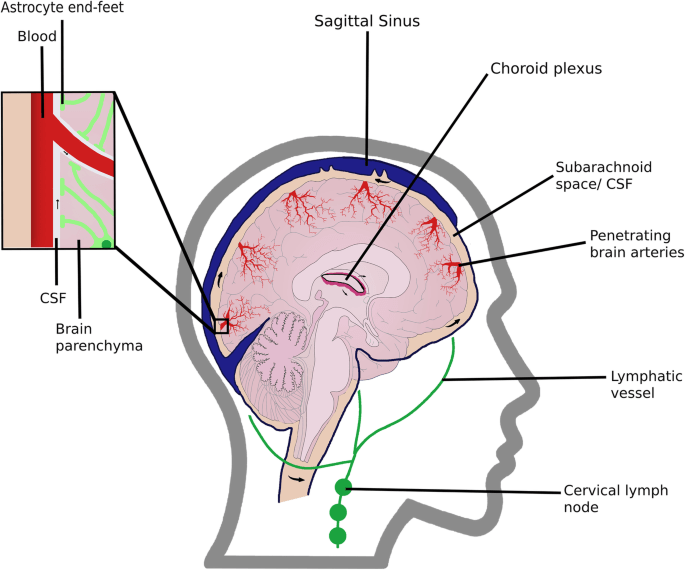
Deep cervical lymphatic-venous anastomosis is one of the more interesting failures-in-progress in recent Alzheimer’s research. Theoretically seductive, evidentially threadbare, and already the subject of a regulatory ban in the country where it originated. The theoretical case The rationale rests on the glymphatic–meningeal lymphatic clearance model: cerebrospinal and interstitial fluid carry metabolic waste, including amyloid-β andContinueContinue reading “The Evidence Gap in Deep Cervical Lymphatic Procedures for Alzheimer’s”
Resistance Exercise Update
A meta-analysis of 192 studies found that untrained individuals doing moderate-load resistance training just twice per week capture ~77% of strength gains, near-maximal muscle growth, and the full mobility benefits of more demanding protocols. The authors use this to define a “minimum effective protocol”: 2 sessions/week, moderate weight (8–12 rep range), 3–4 sets per exercise,ContinueContinue reading “Resistance Exercise Update”
Oura Ring 5 vs RingConn Gen 3
(Or just get an Apple Watch) The Oura Ring 5 and RingConn Gen just launched almost simultaneously, which makes the comparison timely. Here’s how they stack up: Price RingConn Gen 3 wins clearly ($319 pre-order and $60-70 trade in, even for a Gen 1 Oura.) It’s a one-time purchase with no subscription and a 2-3 yearContinueContinue reading “Oura Ring 5 vs RingConn Gen 3”
Analysis and Critique of Delaware HB 422
This post was written by Perplexity, reviewed by Dr. Varipapa and posted on May 15, 2026 HB 422 would create a new Delaware Title 16 chapter requiring enhanced informed consent before vaccines are administered to infants under 12 months at well-child visits, plus mandatory documentation of recent vaccination history in every SUID/SIDS investigation. The billContinueContinue reading “Analysis and Critique of Delaware HB 422”
The AI RoboDoctor Will See You Now

A Harvard-led study just dropped a result that will make every ER doctor’s stethoscope twitch. In a head-to-head against attending physicians at a Boston hospital, OpenAI’s o1-preview reasoning model diagnosed patients more accurately at the moment of triage, just when information is sparse, time is short, and getting it wrong can kill someone. The NumbersContinueContinue reading “The AI RoboDoctor Will See You Now”
Beyond Statins: A Smarter, Personalized Strategy to Reduce Cardiovascular Risk
About the Author I’m a retired neurologist who spent decades managing vascular disease and its consequences—stroke, cognitive decline, and disability. Much of that burden traces back to atherosclerosis. The science of lipid management has evolved dramatically, but everyday practice and public understanding have not kept pace. This piece distills what matters now: how to reduceContinueContinue reading “Beyond Statins: A Smarter, Personalized Strategy to Reduce Cardiovascular Risk”
What’s Wrong with US Health Care
The U.S. health system is fundamentally broken across several dimensions • Unaffordable: High costs burden both individuals (medical debt, especially for chronic illness) and the nation (nearly double per‑capita spending vs. peers). • Incomplete coverage: 27 million uninsured today, potentially rising to ~40 million due to policy changes. • Overly complex: Administrative hurdles—especially prior authorization—makeContinueContinue reading “What’s Wrong with US Health Care”
My Mother’s Memory
My mother is 103 years old. To live for over a century is a miracle, but it comes with a heavy tax. Her progressive dementia has reached a stage where language is slipping away. Her speech has become “gibberish” we can’t quite decode, and her once-prolific writing has slowed to a trickle of fragmented lines.ContinueContinue reading “My Mother’s Memory”
 Dr Bob, Brain Mechanic