
Physician and writer Dhruv Khullar argues that doctors are losing their traditional authority as new forces, artificial intelligence, wellness influencers, populist movements, and corporate interests, compete for public trust in medicine.
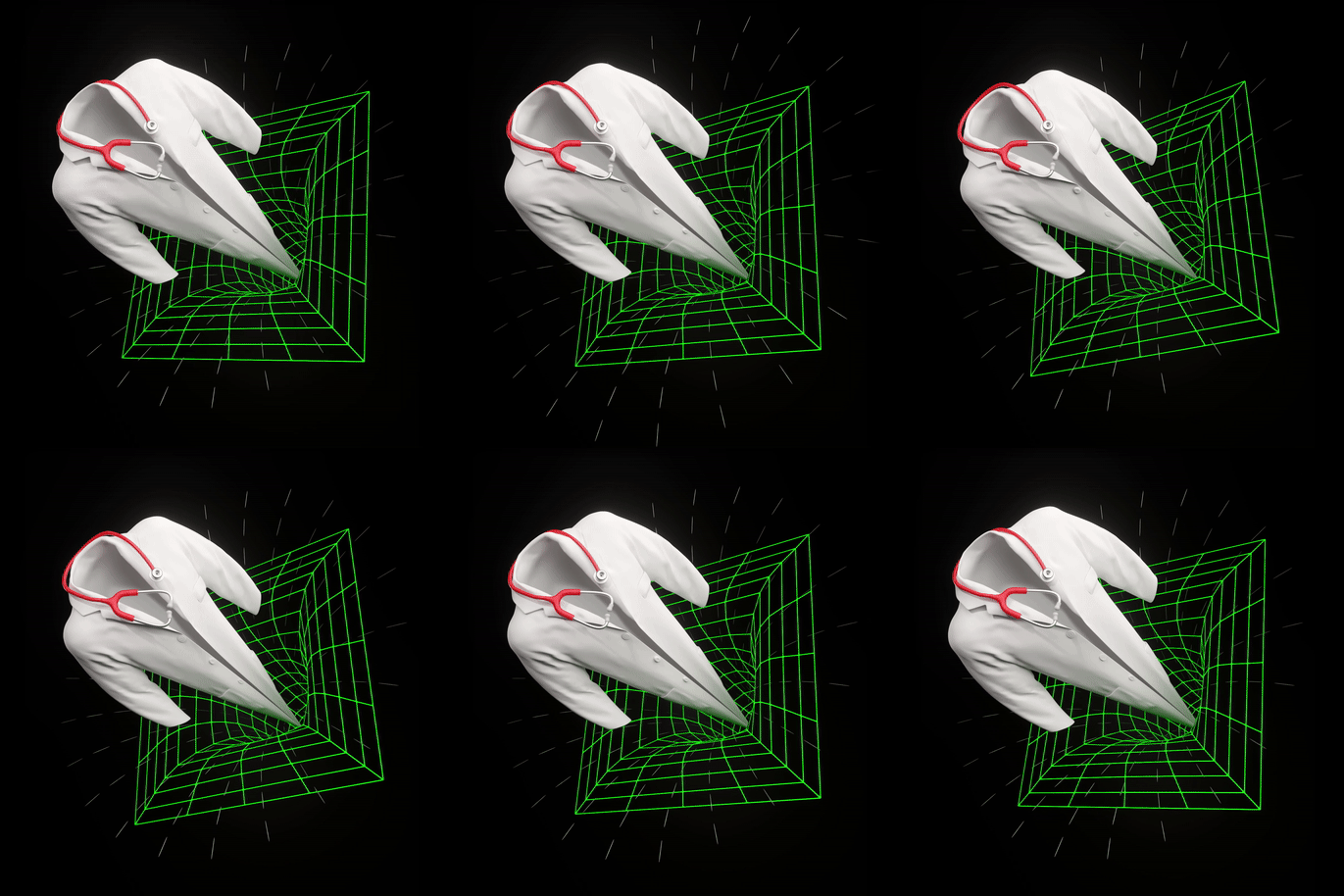
Through the story of “Jim,” a patient who self-diagnosed a blood clot using ChatGPT, Khullar illustrates how the medical journey increasingly unfolds outside traditional health systems.
Khullar traces this erosion of medical authority to several trends:
– The democratization of medical information,
-Public distrust in expertise,
– Long-standing healthcare inequities.
– The corporatization of medicine.
Polls show that many Americans, especially younger ones, believe personal research can rival a doctor’s expertise, while trust in physicians has fallen sharply. Figures like Robert F. Kennedy Jr. and Donald Trump, through movements such as Make America Healthy Again (MAHA), have amplified skepticism toward medical institutions.
The article situates this crisis within a broader historical context, noting that doctors only achieved cultural dominance in the 20th century after a long struggle for legitimacy and professionalization. Khullar suggests that today’s medical “unbundling” where AI tools, startups, and influencers offer piecemeal care which echoes earlier eras when medical authority was fragmented and contested.
He warns that while technology and entrepreneurship can expand access, they also risk eroding ethical care and professional standards. Examples such as AI-driven denial of insurance coverage, overprescribing scandals at mental-health startups, and government de-prioritization of scientific research highlight the dangers of care driven by profit or algorithms rather than human judgment.
Khullar concludes with a call for reinvention rather than restoration. He argues that doctors must embrace new roles as collaborators, communicators, and bridge-builders in a decentralized health ecosystem. Their authority should rest less on hierarchy and more on trust, empathy, and presence—the timeless values of healing.
Khullar’s essay is both diagnosis and prescription for a profession in transition. His writing captures the tension between technological progress and professional erosion with nuance, pairing anecdote and analysis effectively. The opening story of Jim humanizes a sweeping sociopolitical argument, grounding the abstract “crisis of medical authority” in a relatable interaction between doctor and patient.
- Historical grounding: The piece offers valuable historical parallels—especially the populist backlash against medical licensing in the 19th century—that resonate with today’s political dynamics.
- Balanced perspective: Khullar acknowledges both the failings of traditional medicine (inaccessibility, arrogance, inequity) and the perils of its disruptors (misinformation, commercialization).
- Moral clarity: His call for doctors to rediscover their healing mission—emphasizing empathy over hierarchy—feels both timely and timeless.
- Institutional focus: The article leans heavily on macro perspectives (sociology, politics, policy) but could offer more concrete examples of how clinicians are adapting daily—e.g., integrating AI responsibly or restoring trust through local outreach.
Khullar’s central thesis, that doctors must earn trust anew in an era of distributed authority, rings true. As AI and influencer culture redefine expertise, his essay reframes medicine not as a battle for dominance but a negotiation for shared understanding. It invites readers, both within and outside the profession, to see the future of medicine not as a loss of control, but as a return to the essence of care: to “comfort always.”
https://www.newyorker.com/culture/2025-in-review/the-role-of-doctors-is-changing-forever
 Dr Bob, Brain Mechanic