
Audio Version (please click for RSS) Overcast Link
Faith, Fear, and the Future of Technology
Yet another billionaire’s attempt to warp, manipulate and re-interpret the Bible for his own world view?
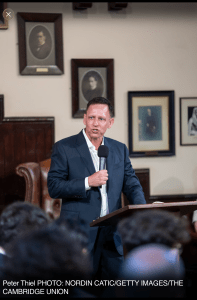
Peter Thiel, the billionaire investor behind some of Silicon Valley’s most powerful technology firms (and JD Vance!), is urging audiences to see the future through a biblical lens. In recent lectures, he has linked artificial intelligence (AI), bioweapons, nuclear war, and climate collapse to the coming of the Antichrist. His (self-serving) warning is stark: regulate technology, and you risk speeding up the apocalypse.
It is an arresting narrative and one that collapses under scrutiny.
The Problem with Theological Tech Policy
Thiel’s claim rests on religious determinism. He draws from biblical prophecy and the writings of French philosopher René Girard to argue that attempts to restrain technology, whether AI regulation or limits on weapons development, invite disaster. The Antichrist, he suggests, will arrive disguised as a great philanthropist whose true danger emerges when fused with state power.
This framing substitutes theology for evidence. Existential risks like nuclear proliferation, engineered viruses, and autonomous weapons are not speculative fulfillments of prophecy, they are measurable, scientifically modeled threats. Tying them to scripture shifts the conversation from pragmatic governance into mysticism. It risks discouraging policy safeguards by labeling them spiritually suspect.
False Choices and Fearmongering
Thiel also presents a false dichotomy: either embrace unrestrained technological progress, or hasten apocalypse. In reality, thoughtful regulation exists between prohibition and blind acceleration.
The EU’s AI Act, for example, doesn’t ban AI but sets transparency and accountability standards.
Nuclear treaties, imperfect as they are, have demonstrably reduced global warhead stockpiles.
Pandemic-preparedness frameworks aim to contain biotechnological risk without halting research.
Progress does not require theological immunity from oversight. Fearmongering against regulation is a political choice, not an inevitable truth.
Miscasting Humanitarianism
Equally troubling is Thiel’s portrayal of altruism as a mask for evil. By suggesting the Antichrist may appear as a humanitarian or “effective altruist,” he casts suspicion on philanthropy itself. This risks undermining genuine efforts to address inequality, improve global health, or combat climate change.
History shows the opposite: unchecked power paired with technological advance, not humanitarian redistribution, has fueled atrocities, from nuclear escalation to totalitarian surveillance states.
Why Evidence, Not Apocalypse, Should Guide Policy
The most pressing risks of our time, climate instability, AI misuse, pandemics are not prophetic puzzles but scientific problems. They require risk modeling, ethical frameworks, and enforceable guardrails.
Climate science offers clear pathways to mitigation.
AI safety research highlights algorithmic bias, privacy risks, and concentration of power.
Public health surveillance and treaty-based norms remain the strongest defense against engineered bioweapons.
Religious narratives may enrich private meaning, but they are an unstable foundation for public policy in a pluralistic, science-driven world.
The Real Danger
Thiel’s worldview is not merely eccentric. As an investor in AI, defense, and surveillance firms, he influences both capital flows and policy debates. If apocalyptic theology is allowed to justify deregulation, the result may not be prophecy fulfilled but preventable disasters overlooked.
The danger is not the Antichrist. It is letting billionaires reframe existential risk in mystical terms, distracting from the hard, evidence-based work of safeguarding humanity.
Future Article
Is Donald Trump the antichrist?
Sources
https://www.wsj.com/tech/peter-thiel-antichrist-lectures-dd28c876
https://apple.news/AzuZHy2IdTLGvB9ow4LG2Mg
https://sfstandard.com/2025/09/23/spilled-peter-thiel-s-antichrist-secrets-now-s-banned-lectures/
 Dr Bob, Brain Mechanic