
Biblical Scapegoating?
In the aftermath of the October 7 attacks, Benjamin Netanyahu invoked a powerful biblical phrase: “Remember what Amalek has done to you.” He later clarified that he was referring to Hamas, not Palestinians as a whole. But the word itself carries a gravity that cannot be easily contained.
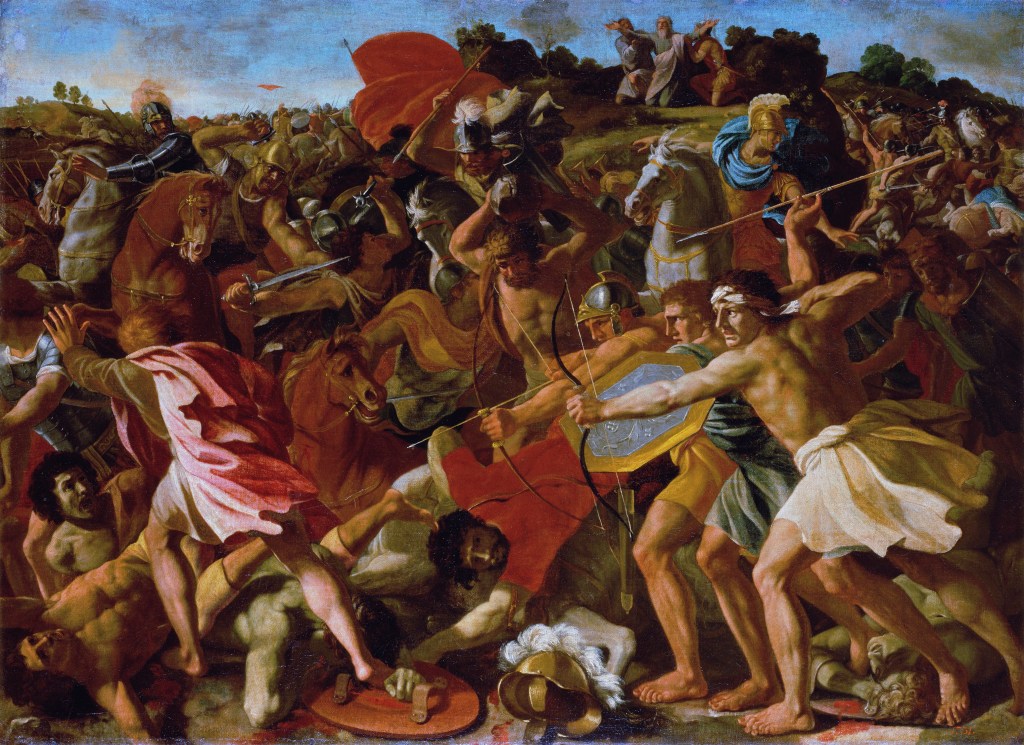
“Amalek” is not simply an enemy. It is the enemy. Absolute. Irredeemable.
And that is precisely why its use in modern war is so fraught.
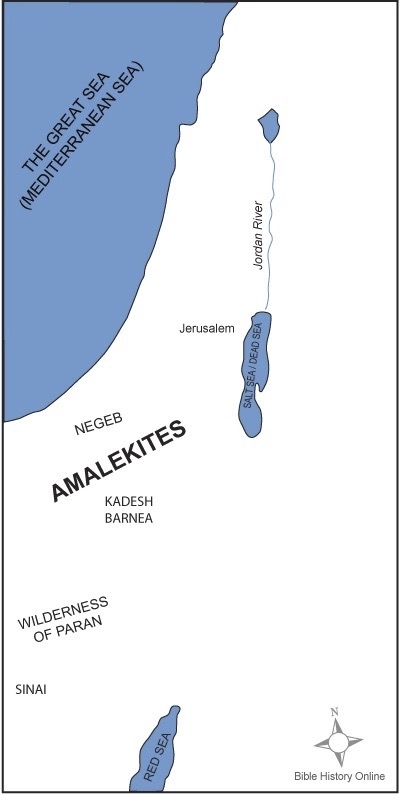
In the Hebrew Bible, Amalek was a specific people, remembered for attacking the Israelites from behind, targeting the weak and vulnerable during their exodus from Egypt. The response encoded in scripture was stark: remember them, and erase their memory. Over time, however, Jewish thought transformed Amalek into something broader and more abstract. It came to represent cruelty without cause, moral indifference, and the deliberate targeting of the defenseless.
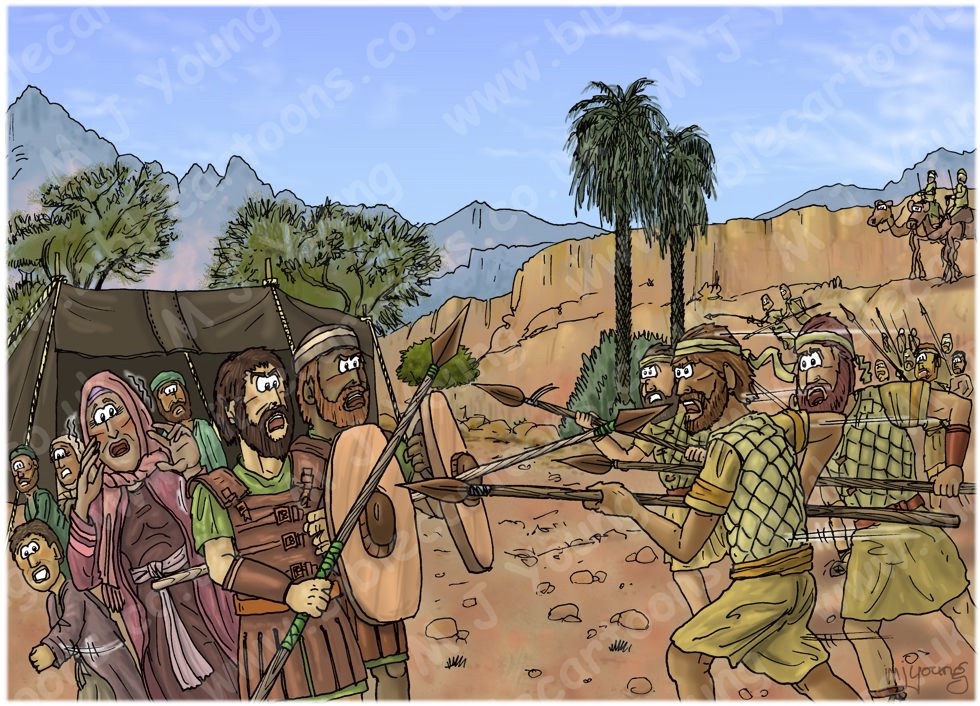
In some traditions, Amalek is not even external. It is internal, a metaphor for doubt, cynicism, and the erosion of moral clarity within the individual. This evolution matters. It shifts the concept away from ethnicity and toward behavior. But when the term is pulled back into political rhetoric, that distinction can collapse.
In modern conflict, language is not ornamental. It signals intent, frames policy, and shapes behavior on the ground. When leaders invoke Amalek, even metaphorically, they risk transforming a complex conflict into a moral absolute.

First, the enemy becomes total. War always simplifies reality, but “Amalek” eliminates ambiguity altogether. There are no civilians in Amalek, no dissenters, no gray zones. That framing collides directly with the core principles of modern armed conflict, which depend on distinctions between combatants and noncombatants and on proportionality in the use of force.
Second, restraint becomes suspect. If the enemy is pure evil, then limits can appear as weakness. This is not a theoretical concern. Extremists have previously used the Amalek analogy to justify violence against civilians, as in the case of Baruch Goldstein. Most leaders reject such interpretations, but once this language enters public discourse, it cannot be tightly controlled.
Third, legal risk escalates. In 2024, South Africa cited references to Amalek in its genocide case against Israel at the International Court of Justice, arguing that such language signals intent to destroy a people. Israel’s response was that the commandment regarding Amalek has long been understood as non-operative in Jewish law and that the term functions as a cultural metaphor for evil. Both claims may be valid. But in international law, perception carries weight alongside intent.
The deeper issue is psychological. Labeling an enemy as Amalek converts fear into certainty and grief into moral clarity. It simplifies a chaotic reality into a binary of good and evil. That is why similar language appears across cultures and conflicts. The function is always the same: to remove moral hesitation.
But the cost is equally consistent. Once an enemy is stripped of moral status, limits begin to erode.
There is a legitimate role for the concept of Amalek. As metaphor, it serves as a warning against cruelty, indifference, and the targeting of the vulnerable. Used in that way, it sharpens ethical awareness. But when applied, even implicitly, to a people, it risks doing the opposite. It can license excess rather than constrain it.
Leaders do not control how their words are interpreted. They control whether ambiguity exists in the first place. In modern war, clarity matters more than resonance. If the target is a terrorist organization, it should be named precisely. If the concern is behavior, that behavior should be defined. Language that implies annihilation, even unintentionally, is a liability.
Ancient texts speak in absolutes. Democracies cannot afford to.
“Amalek” endures because it captures something real about human cruelty. But when that ancient idea is imported into modern statecraft, it becomes volatile. The line between metaphor and mandate is thinner than it appears.
And in war, thin lines have a way of disappearing.
 Dr Bob, Brain Mechanic