
Honeybee swarming is a natural and fascinating part of a colony’s life cycle. While it can look intimidating to see thousands of bees flying in a dark cloud, it is actually a sign of a healthy, thriving colony.
Think of a swarm not as a group of bees “running away,” but as biological reproduction on a colony level.
1. Colony Reproduction
Just as a single bee eventually dies, a colony must “reproduce” to ensure the survival of the species. When a hive becomes successful and overcrowded, it splits in two.
- The Departure: The “old” queen takes about half of the worker bees and leaves the original hive.
- The New Generation: They leave behind a few “queen cells” (larvae being raised to be queens), some worker bees, and all the honey stores to ensure the new colony has a head start.
2. Overcrowding and Resource Wealth
Swarming usually happens in late spring or early summer when resources are abundant. Several factors trigger the “swarm impulse”:
- Physical Space: If the hive is physically full of honey, pollen, and brood (baby bees), the queen has nowhere left to lay eggs.
- Pheromone Dilution: The queen produces a “Queen Mandibular Pheromone” (QMP) that keeps the colony cohesive. In a cramped hive, this scent doesn’t reach every bee. When worker bees stop sensing the queen’s pheromones, they begin preparing to raise a new queen and swarm.
3. The Temporary “Bivouac”
When you see a cluster of bees hanging from a tree branch or a fence post, they are in a transitional state called a bivouac.
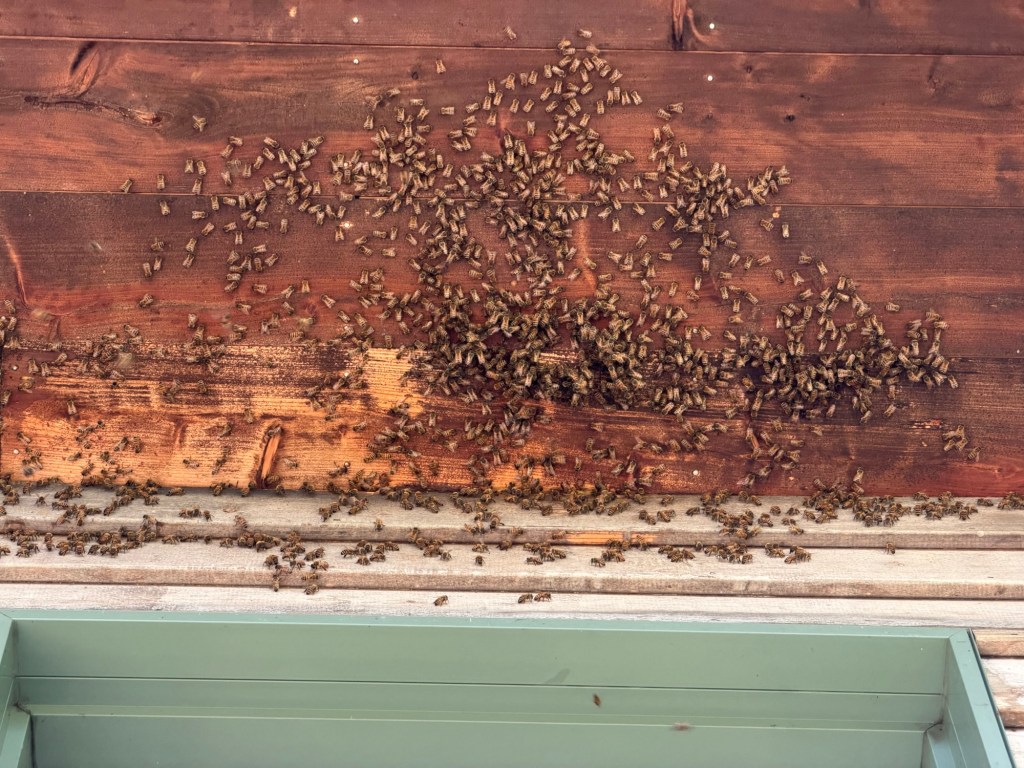
- They are protecting the queen in the center of the ball.
- Scout Bees fly out from this cluster to look for a permanent home (like a hollow tree or a wall cavity).
- Once the scouts agree on a location through a “waggle dance” on the surface of the swarm, the entire group takes flight to their new home.
4. Are they dangerous?
Actually, bees are at their most docile during a swarm.
- No Home to Defend: They have no hive, honey, or baby bees to protect.
- Full Bellies: Before leaving the old hive, the bees gorge themselves on honey to fuel their flight. Much like a human after a massive Thanksgiving dinner, they are too full and lethargic to be aggressive.
Important Note: If you see a swarm, don’t spray it with water or chemicals! Simply call a local beekeeper. Most are thrilled to come “catch” the swarm for free to give the bees a safe, managed hive to live in.

