

How a Single Dose May Rewire the Brain for Weeks
A growing body of research is reshaping how scientists understand psychedelics, not as fleeting, mind-altering experiences, but as catalysts for longer-term biological change.

Two recent studies offer compelling evidence that psilocybin, the active compound in “magic mushrooms,” may alter brain communication patterns and immune signaling in ways that persist weeks after a single dose.
A Brain That Communicates Differently
One study, published in Human Brain Mapping, examined how psilocybin affects brain dynamics over time. Researchers administered a single 25 mg dose to 25 healthy participants with no prior psychedelic experience and tracked changes using advanced neuroimaging and computational modeling.
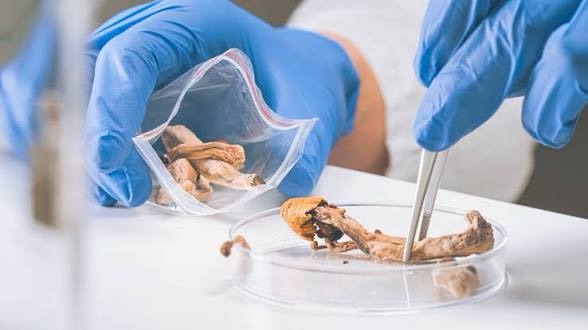
Four weeks later, the results were striking. Brain activity across key regions, particularly the prefrontal cortex, striatum, and thalamus, became more variable and flexible. This variability is often interpreted as a marker of enhanced adaptability, suggesting the brain may be operating in a more dynamic and less constrained mode.
Even more notable was a shift in how information flowed through the brain. Top-down signaling, typically driven by higher-order regions like the prefrontal cortex, decreased. Meanwhile, bottom-up input from deeper structures such as the thalamus increased. In simple terms, the brain appeared to rely less on rigid executive control and more on incoming sensory and emotional signals.
These changes align with known receptor systems: serotonin 5-HT2A receptors (linked to psychedelics) and dopamine D2 receptors (involved in motivation and reward). Together, they point to a rebalancing of neural communication that could help explain the therapeutic effects reported in clinical settings.
Converging Paths: Psychedelics and Ketamine
A second study, published in Molecular Psychiatry, explored a different but related question: how psychedelics and ketamine, two very different classes of rapid-acting antidepressants, might produce similar long-term benefits.

Researchers at MD Anderson Cancer Center identified shared neuroimmune pathways that appear to predict treatment response. Specifically, biomarkers such as interleukin-15 (IL-15), interleukin-7 (IL-7), and B-cell signaling activity were associated with better outcomes in patients receiving ketamine for treatment-resistant depression.
Despite acting on different receptors, ketamine on NMDA receptors and psilocybin on serotonin systems, both appear to converge on immune-related signaling mechanisms. This suggests that part of their antidepressant effect may be mediated not just by neural activity, but by the immune system’s interaction with the brain.
The implication is significant: mental health treatments may increasingly be understood through a combined neurobiological and immunological lens.
Why This Matters for Mental Health
Traditional antidepressants often require daily dosing and can take weeks to show effects. In contrast, psilocybin and ketamine have demonstrated rapid and sometimes sustained improvements after just one or a few sessions.
The emerging picture is that these substances may “reset” certain brain networks, loosening entrenched patterns of thought and behavior while promoting more flexible, adaptive processing. At the same time, immune signaling changes may support or stabilize these shifts.
For individuals with treatment-resistant depression, PTSD, or other difficult-to-treat conditions, this dual mechanism offers a promising new direction for therapy.
Important Limitations
While the findings are intriguing, they are far from definitive.
• The psilocybin study involved a small sample size and lacked full randomization.
• Its conclusions rely on computational modeling rather than direct measurement of neurotransmitter activity.
• The neuroimmune findings are exploratory and require validation in larger, controlled trials.
In other words, the science is advancing—but it is not yet settled.
The Road Ahead
Future research will likely focus on identifying which patients benefit most, refining dosing protocols, and understanding how long these changes truly last. There is also growing interest in combining psychedelic therapy with structured psychological support to maximize outcomes.
What is becoming clear, however, is that psychedelics are not just transient experiences. They may induce measurable, lasting changes in how the brain and body communicate, opening a new frontier in the treatment of mental health disorders.
As this field evolves, it will challenge long-standing assumptions about both psychiatry and neuroscience and ultimately redefine what effective treatment looks like in the years ahead.
NB: Johns Hopkins Psychedelic Research Center is a good resource for patients seeking this type of treatment.
 Dr Bob, Brain Mechanic