
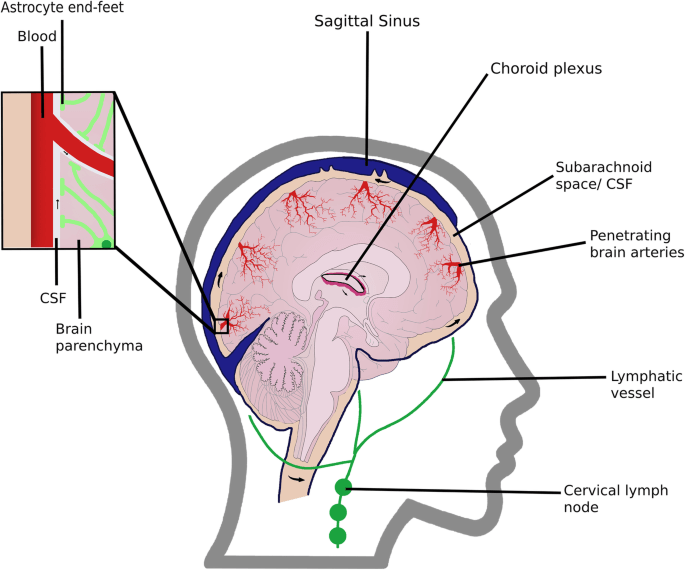
Deep cervical lymphatic-venous anastomosis is one of the more interesting failures-in-progress in recent Alzheimer’s research. Theoretically seductive, evidentially threadbare, and already the subject of a regulatory ban in the country where it originated.
The theoretical case
The rationale rests on the glymphatic–meningeal lymphatic clearance model: cerebrospinal and interstitial fluid carry metabolic waste, including amyloid-β and tau, out of the brain along perivascular routes, through meningeal lymphatics, and eventually into deep cervical lymph nodes. If impaired clearance contributes to AD pathology (which has real support, the glymphatic system is thought to clear cellular waste including amyloid-β), then surgically connecting deep cervical lymphatic channels to adjacent veins to relieve a drainage bottleneck is at least a coherent idea. The procedure aims to lower lymphatic pressure and let fluid flow into the lower-pressure venous system.
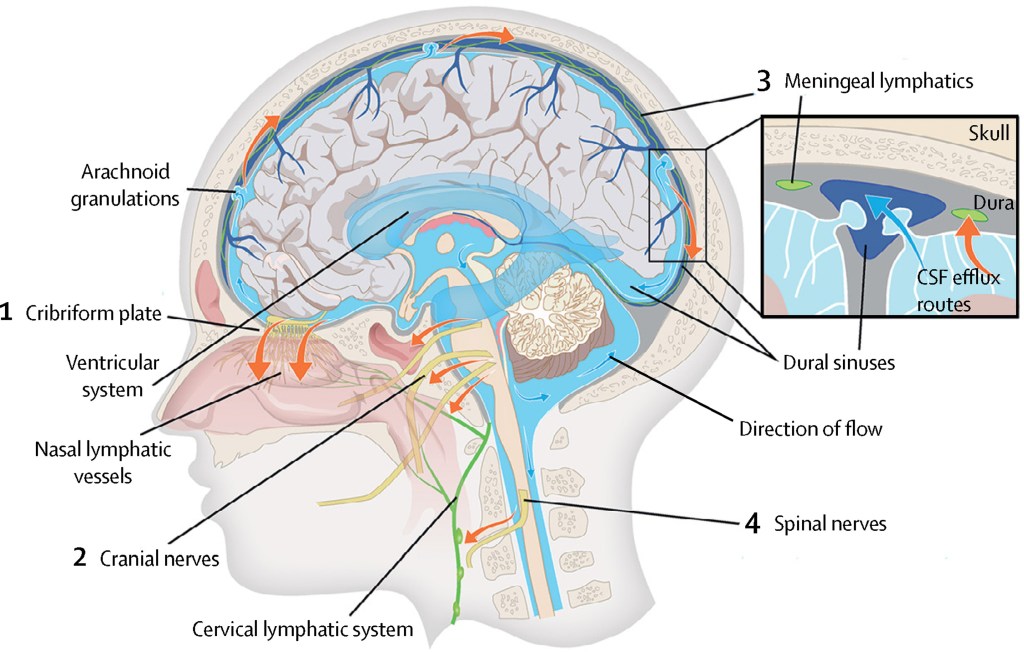
The problem is that coherence is not evidence, and each link in this chain is an assumption: that clearance failure is causal rather than downstream; that the rate-limiting step sits at the cervical outflow (as opposed to AQP4-mediated parenchymal exchange or perivascular transport, which are far upstream); and that a neck anastomosis meaningfully changes intracranial dynamics. Unresolved physiological uncertainties include rate-limiting steps in clearance, the venous-lymphatic pressure gradient, and reflux risk. Creating a low-resistance path into a vein could as easily cause venous reflux into the lymphatic system as improve net drainage.
The evidence base
Every human study to date shares the same fatal design feature: they are single-arm, pre–post, uncontrolled. The largest is a prospective single-arm study of 139 severe AD patients with a 6-month follow-up. There’s a 28-patient advanced-dementia series and various case reports. No randomization. No sham surgery. No blinding of patients, caregivers, or assessors.
For a condition like dementia, that constellation is close to disqualifying, because the reported outcomes are exactly the ones most vulnerable to bias:
- The primary signals are modest MMSE increases and reductions in ADL, Neuropsychiatric Inventory, caregiver-distress, and sleep-disorder scores. These are subjective or caregiver-reported and highly susceptible to expectation effects, especially after a dramatic, expensive surgical intervention.
- Sham-controlled surgical trials in other fields (vertebroplasty, Parkinson’s fetal-cell grafts, arthroscopic knee lavage) have repeatedly shown that open-label surgical benefit evaporates against a sham arm. There is no reason to think dementia is exempt, if anything the placebo/caregiver-expectation channel is stronger.
- Regression to the mean and practice effects push in the same favorable direction.
- Selecting severe/advanced patients maximizes measurement noise and floor effects, making fluctuations easy to over-read.
The biomarker story is genuinely ambiguous, not confirmatory
The papers report decreased CSF Aβ42, Aβ40, and p-tau after surgery, with increased plasma concentrations, and frame this as waste being cleared from brain to blood. But falling CSF Aβ42 is the classic signature of worsening Alzheimer’s (more peptide sequestered in plaque, less in fluid). The clearance interpretation and the disease-progression interpretation predict the same CSF direction. To distinguish them you’d need amyloid/tau PET showing reduced brain burden—which most of these studies lack—and a controlled design to attribute the plasma rise to the surgery rather than to natural fluctuation. A single-arm study simply cannot separate these.
The ceiling problem, even granting the mechanism
Suppose dcLVA does modestly enhance amyloid clearance. The anti-amyloid antibodies (lecanemab, donanemab) robustly clear plaque and still deliver only a small slowing of decline—and mainly in early disease. A procedure offered to moderate-to-severe patients, where neurodegeneration is already advanced, is operating well past the window where amyloid removal plausibly helps. The mechanism it invokes is the same one that yields marginal returns in far better-controlled drug trials.
Ethics and regulation
This is where it stops being an ordinary “promising-but-unproven” story. On 8 July 2025 China’s National Health Commission issued a notice prohibiting clinical application of dcLVA for AD. Reporting since then describes that the procedure spread rapidly through China, drawing criticism over its lack of standardisation, high price, potential complications, and the ethics of performing experimental surgery on vulnerable patients, and was banned in July 2025 for lack of robust clinical evidence; the microsurgeon who performed the first dcLVA has reportedly been detained even as international trials go ahead. Performing irreversible surgery on patients whose capacity to consent is compromised, ahead of any randomized evidence and at commercial scale, is a serious ethical breach regardless of the biology.
Critically, the ban is not proof the idea is wrong. Regulators acted on an evidence deficit, not a demonstrated harm signal or a refutation. Methodological commentaries make the constructive version of this point: surgical trials for neurodegenerative disease must implement sham controls and long-term functional endpoints, and prospective complication registries are non-negotiable for vulnerable populations.
What would actually settle it
A multicenter RCT with a sham-surgery control arm, blinded outcome assessment, a 12-month CDR-SB primary endpoint, amyloid/tau PET and DTI-ALPS imaging, CSF/plasma biomarker panels, and longitudinal systemic safety surveillance (hepatic, renal, hematologic). International trials are now underway—including one pilot pairing dcLVA with lecanemab—so within a few years there should be controlled data. Until a sham-controlled trial reports, the honest status is: biologically interesting hypothesis, essentially no credible efficacy evidence, and a track record of premature, ethically dubious deployment.
Bottom line: the concept deserves a proper trial, but the current literature would not survive peer review as evidence of efficacy in any well-controlled setting, and the enthusiasm has badly outrun the data.

